Understanding PLA and CPLA
PLA, or polylactic acid, is a polyester commonly produced using sugars from sources such as corn or sugarcane. It can be processed into products including cups, lids, films and cutlery.
CPLA generally refers to crystallised PLA formulations, often developed to improve heat resistance. Product performance depends on the formulation, processing and design. Confirm temperature limits and intended use for each item.
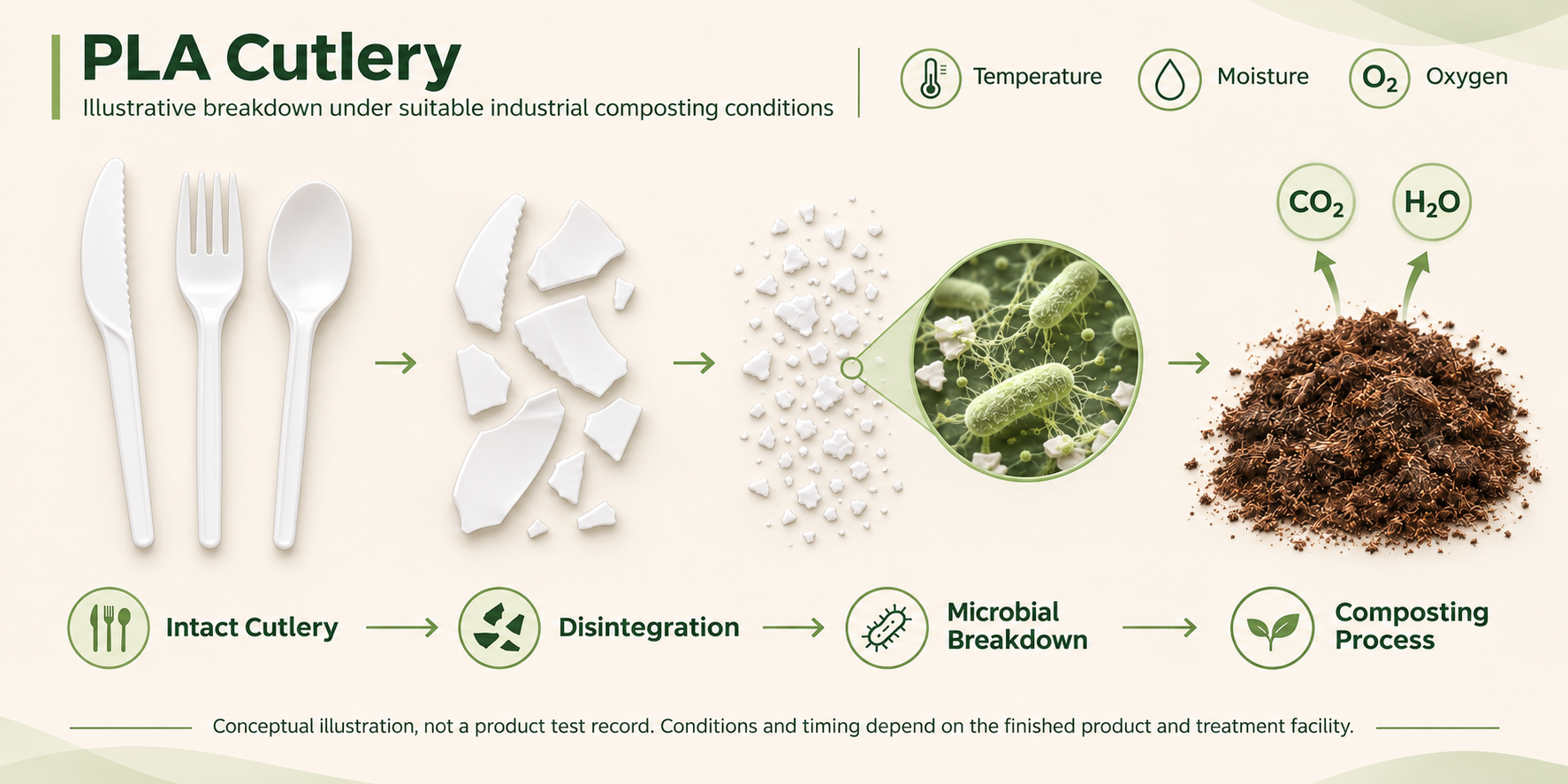
White Cutlery
White cutlery offers a clean presentation for takeaway meals, catering and meal kits. Knives, forks and spoons can be supplied individually or in combinations, according to the available specification.
- Knife, fork and spoon combinations
- Length, weight and handle design
- Rigidity and suitability for the intended food
- Individual wrapping or kit packing
White colour alone does not distinguish PLA from CPLA. Confirm the selected material and permitted food temperature before ordering.
CPLA Straws
CPLA straws are available for different drinking applications. Choose the length, diameter and wall thickness to suit your cup, beverage and serving requirements.
- Standard drinks or wider-diameter applications such as bubble tea
- Straw length, diameter and wall thickness
- Straight or angled-end options, where available
- Individual wrapping and packing requirements
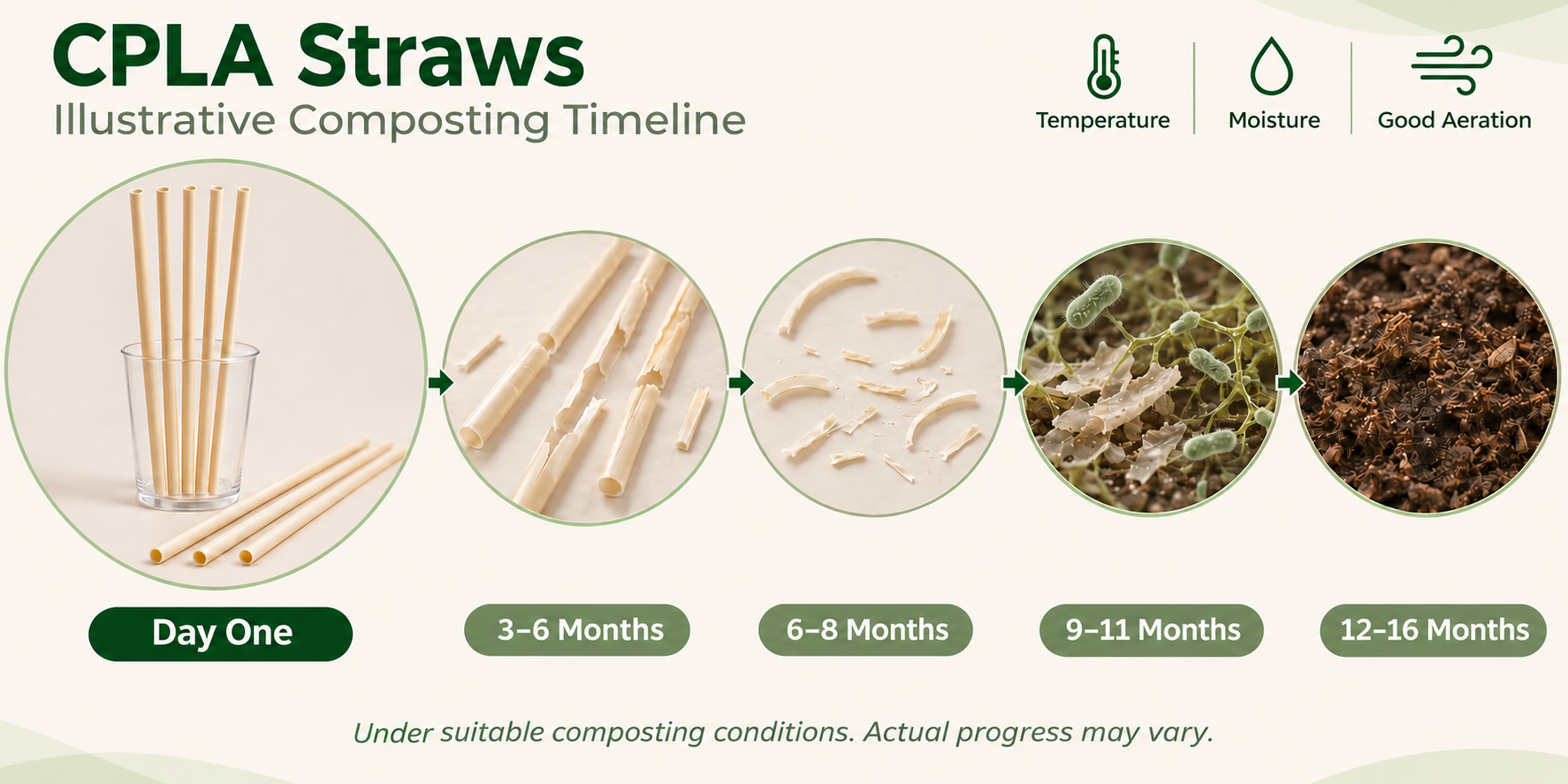
Confirm suitability for the beverage temperature and expected contact time. The reference timeline below shows the stages indicated for this straw, from initial use through approximately 12–16 months under suitable composting conditions.
Clear PLA Cups and Lids
Clear PLA cups provide visibility for bubble tea, juice and other cold beverages. Matching lids can complete the presentation and support takeaway service.
- Cup capacity and dimensions
- Rim diameter and matching lid fit
- Flat or dome lid options, where available
- Drinking or straw opening requirements
- Printing and packing options
Clear PLA cold cups should not be assumed suitable for hot drinks. Confirm the temperature limits of the cup and lid separately.
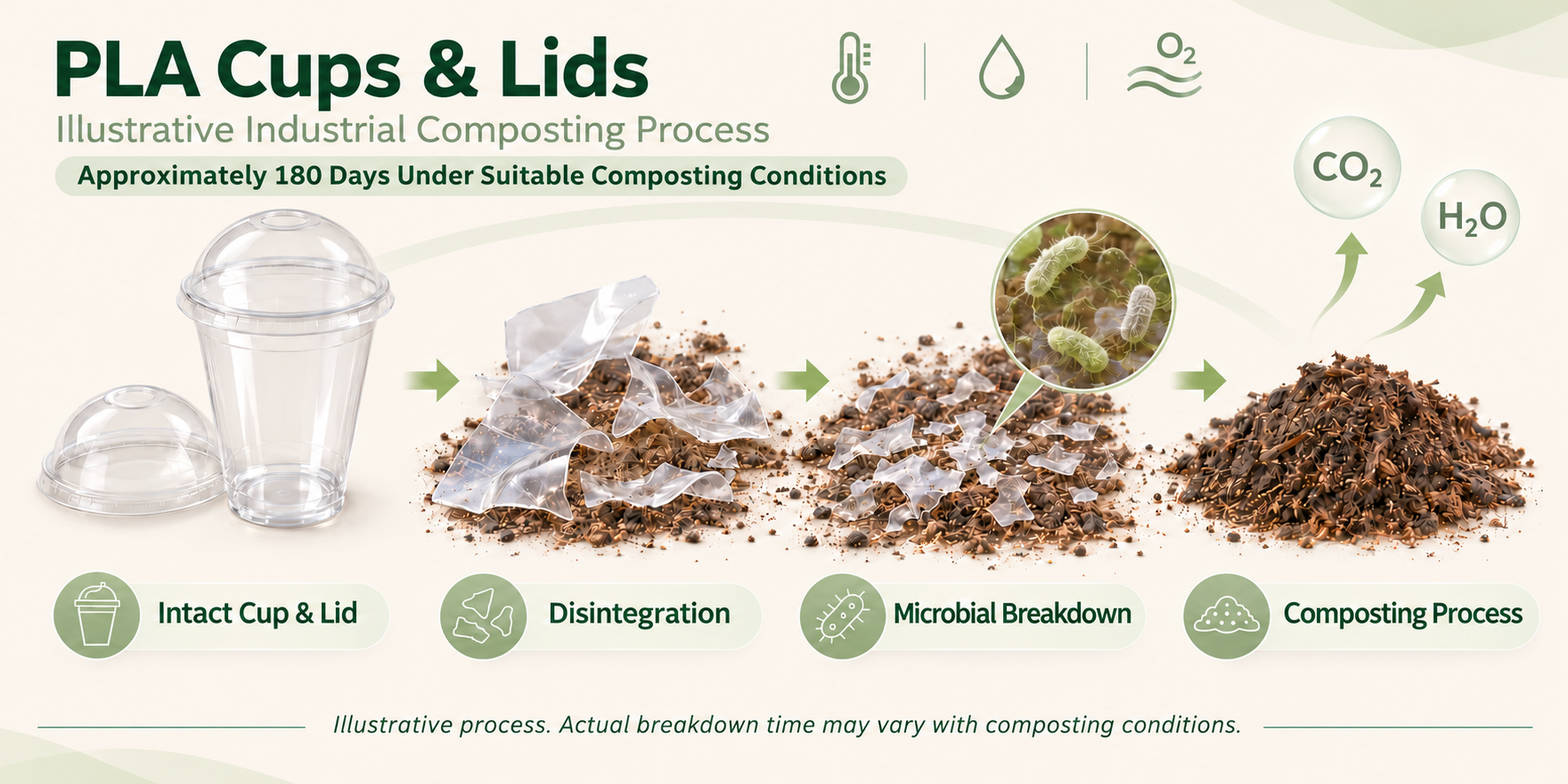
For the cup shown, the indicated composting period is approximately 180 days under suitable composting conditions. Confirm the corresponding requirements for the matching lid; a cup result does not automatically establish the same performance for every lid.
How the Material Breaks Down
Under suitable conditions, heat and moisture promote hydrolysis, breaking PLA polymer chains into smaller molecules. Microorganisms can then metabolise breakdown products. In aerobic composting, biodegradation can produce carbon dioxide, water and biomass.
Disintegration and biodegradation are different processes and can overlap. Visible fragmentation alone does not demonstrate complete biodegradation or compostability. The compost pictured represents a mixed composting process, not an item turning directly into soil.
Match the Product to the Treatment Route
- Confirm whether the specific product is suitable for the intended composting system.
- Do not assume industrial compostability also means home compostability.
- Check whether local collection services and facilities accept the product.
- Assess lids, wrappers and other components separately.
- Do not interpret the timelines as breakdown periods in seawater, landfill, ordinary soil or when littered.
The graphics illustrate processes rather than serving as test records. Where certification is required, request documentation covering the selected finished item. Do not place PLA or CPLA in conventional plastic recycling unless the local service explicitly accepts it.
Find Products for Your Application
Tell WILDS your product format, food or beverage temperature, dimensions, order quantity, packing requirements and destination market. We can help you review available specifications, samples, MOQ, lead time and supporting information.
Explore our cutlery and drinkware range →
View our certifications page →