From Sugarcane to Packaging
Bagasse is the fibrous material left after sugarcane juice extraction. It can be processed into moulded food packaging, giving a useful role to an agricultural by-product.
How Bagasse Packaging Is Made
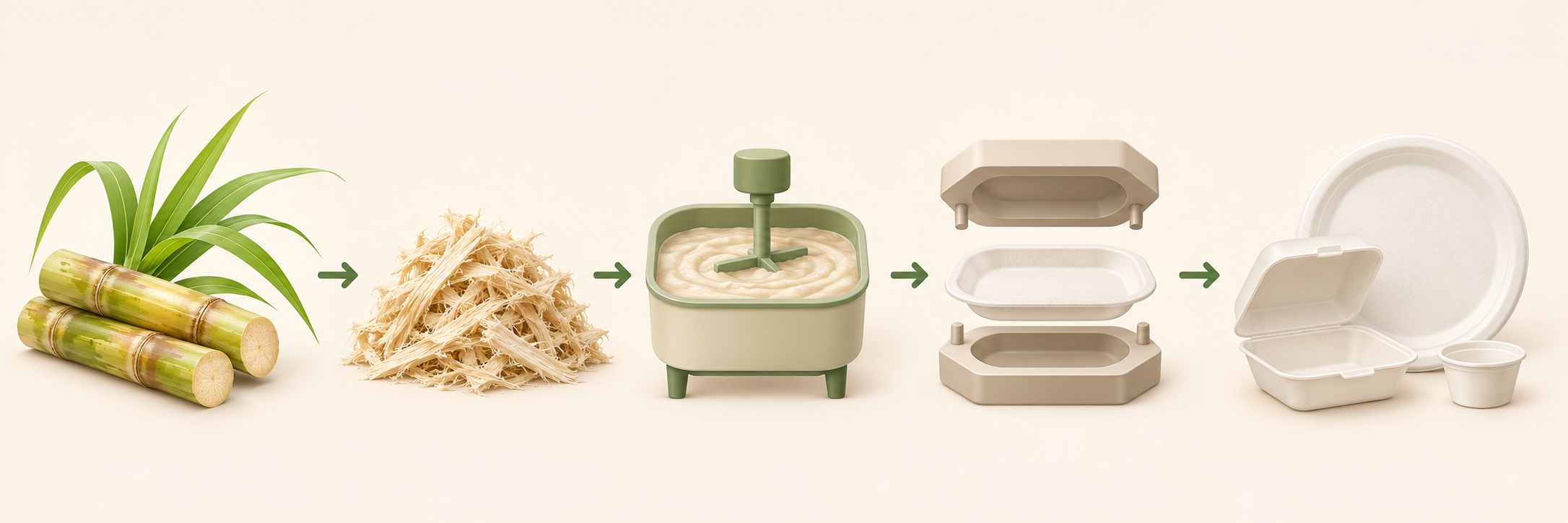
- Fibre recovery. Bagasse remains after juice is extracted from sugarcane.
- Pulp preparation. The fibres are processed into pulp suitable for the selected product.
- Moulding and drying. The pulp is shaped in moulds, pressed and dried.
- Finishing and inspection. Products are trimmed and checked against agreed specifications before packing.
Fibre blends, processing methods, treatments and coatings vary by product. The illustration shows a general process rather than a specific factory production line.
Made for Different Food Packaging Needs
Bagasse can be formed into different shapes for serving and packing food. Available options include:
- Plates: round, oval, square and compartment designs for meals, sides and desserts.
- Burger boxes: hinged containers for burgers and other takeaway foods.
- Food containers: single-compartment and divided formats for different meal layouts.
- Sauce cups: portion cups for dips, dressings and condiments, with compatible lids where available.
Explore our bagasse packaging range →
Choose the Right Product for Your Application
Check usable dimensions, food temperature, contact time, grease and moisture exposure, lid fit and stacking requirements. Test samples with your actual food and delivery process.
Suitability for refrigeration, freezing or reheating should be confirmed separately for the selected container and lid.
Understanding the Composting Process
For products confirmed as suitable for the intended composting system, microorganisms can break down the material under appropriate conditions. Moisture, temperature, oxygen and time all influence this process.
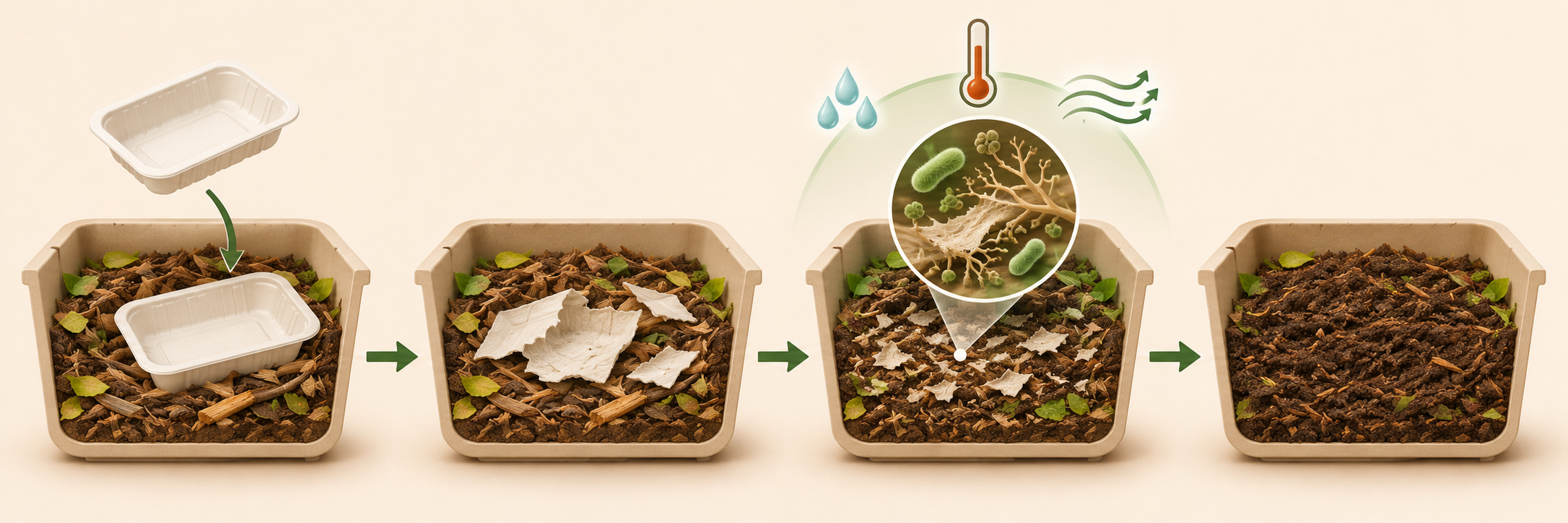
Visible fragmentation alone does not demonstrate complete biodegradation or compostability. Industrial and home composting have different requirements; suitability for one does not establish suitability for the other.
After Use: Check the Appropriate Route
Disposal options depend on the finished product, coatings or linings, food contamination and local collection services.
- Check the base, lid and other components separately.
- Confirm whether local facilities accept the specific packaging.
- Follow the relevant collection and treatment instructions.
- Confirm product-specific documentation before making compostability claims.
Fibre-based packaging is not automatically accepted in paper recycling or composting collections. This illustration does not mean that every WILDS product is certified compostable, suitable for home composting or designed to break down when littered.
Find Packaging That Fits Your Needs
Tell us your food type, preferred packaging format, order quantity, destination market and documentation requirements. WILDS will help you review available options and confirm the specifications for your project.
View bagasse packaging options →
View our certifications page →