From Bamboo Fibers to Packaging
Bamboo-derived fibers can be processed into molded packaging for food service, fresh produce and other applications. Pulp preparation, molding, pressing and drying give the product its shape and structure.
Finished-product performance depends on fiber composition, thickness, design and any treatments or coatings. Confirm these details for the selected item rather than relying on the material name alone.
Packaging for Different Applications
- Plates: round, square, oval and compartment designs for meals, sides and desserts.
- Fruit and vegetable trays: formats for packing and displaying fresh produce.
- Fresh-food trays: options for meat, poultry and seafood, subject to the selected specification.
- Sushi boxes: shallow bases with matching lid options where available.
- Egg cartons and trays: individual compartments to separate and support eggs.
- Cup carriers: designs for carrying multiple takeaway drinks.
Explore our bamboo fiber packaging range →
Choose for Your Product and Handling Process
Start with the contents, portion size, required dimensions and handling conditions. For food packaging, confirm food-contact suitability, temperature limits and expected contact time.
- Check usable internal dimensions and depth.
- Confirm grease and moisture resistance for the intended application.
- Test stacking and transport performance with the actual contents.
- Check lid fit or compatibility with any wrapping film.
- Confirm packing quantities and storage requirements.
For cup carriers and egg packaging, test fit, stability and load capacity. Confirm refrigeration, freezing or reheating suitability separately where relevant.
Understanding the Breakdown Process
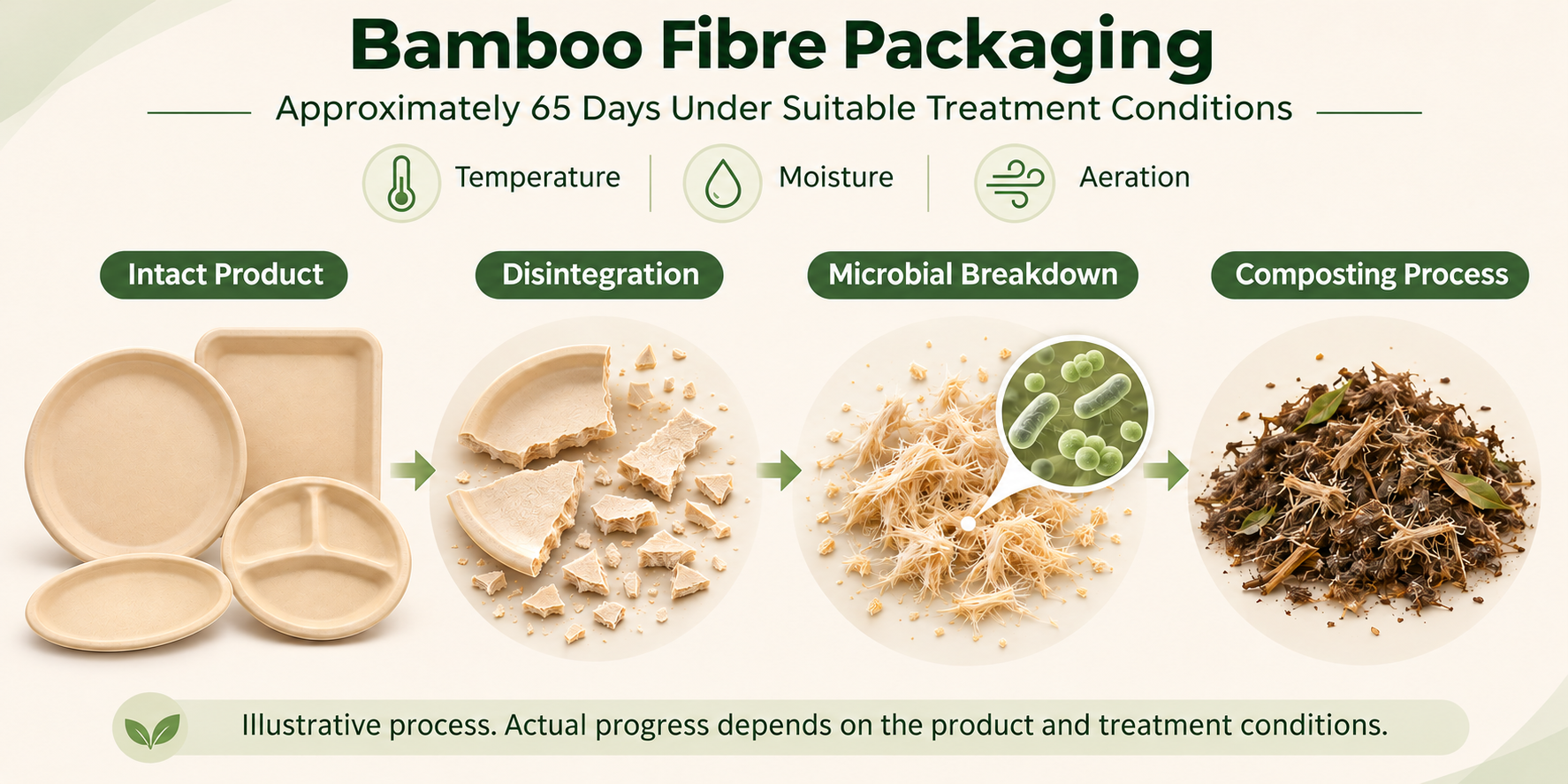
For the bamboo fiber plate discussed here, WILDS reports an observed breakdown period of approximately 65 days under the conditions used. This observation is specific to the product and conditions; it is not a universal timeline for all bamboo fiber packaging or proof of complete biodegradation.
What Happens During Breakdown?
- Moisture exposure. Fibers can absorb moisture, changing the structure and reducing strength.
- Disintegration. The product can soften, crack and separate into smaller fiber fragments.
- Microbial activity. Under suitable conditions, microorganisms further break down biodegradable components.
- Continued treatment. The remaining material continues to change within the treatment environment.
These stages can overlap. Visible fragmentation or loss of shape alone does not establish complete biodegradation, compostability or the absence of residues. The compost pictured represents a mixed organic treatment process, not a plate turning directly into soil.
Check the Finished Product and Disposal Route
A bamboo fiber product may contain other fibers, binders, treatments or coatings. These can affect performance and end-of-life options. Ask for the composition and supporting information relevant to the selected specification.
- Confirm whether local services accept the specific product.
- Assess separate lids, films and other components individually.
- Do not assume that soil breakdown establishes home or industrial compostability.
- Do not place food-soiled or coated fiber packaging in paper recycling unless the local service accepts it.
- Do not treat the illustrated process as permission to litter or bury packaging outdoors.
Where food-contact or compostability documentation is required, confirm that it covers the actual finished product and intended use.
Discuss Your Bamboo Fiber Packaging Requirements
Tell WILDS your application, dimensions, contents, order quantity, printing requirements and destination market. We can help you review available formats, samples, specifications, MOQ and lead time.
View bamboo fiber packaging options →
View our certifications page →