One Material Blend, Different Applications
WILDS shopping bags and waste bags in this range use a blend of PBAT and corn starch. The blend can be processed into flexible film for different bag formats, with dimensions, thickness and construction selected for the intended application.
PBAT is a biodegradable polyester; it is not the same material as corn starch. The blend should not be described as pure starch or 100% plant-based. Exact composition and finished-product properties should be confirmed for the selected specification.
Shopping Bags
T-shirt-style shopping bags provide a carrying option for retail purchases, groceries and takeaway orders. Select the size, gusset, film thickness and handle design according to the contents and expected load.
- Bag width, length and gusset dimensions
- Film thickness and carrying requirements
- Handle design and ease of carrying
- Custom artwork, print colours and position
- Units per pack and carton
Test samples with your actual products. Weight, sharp edges and carrying time can affect performance.
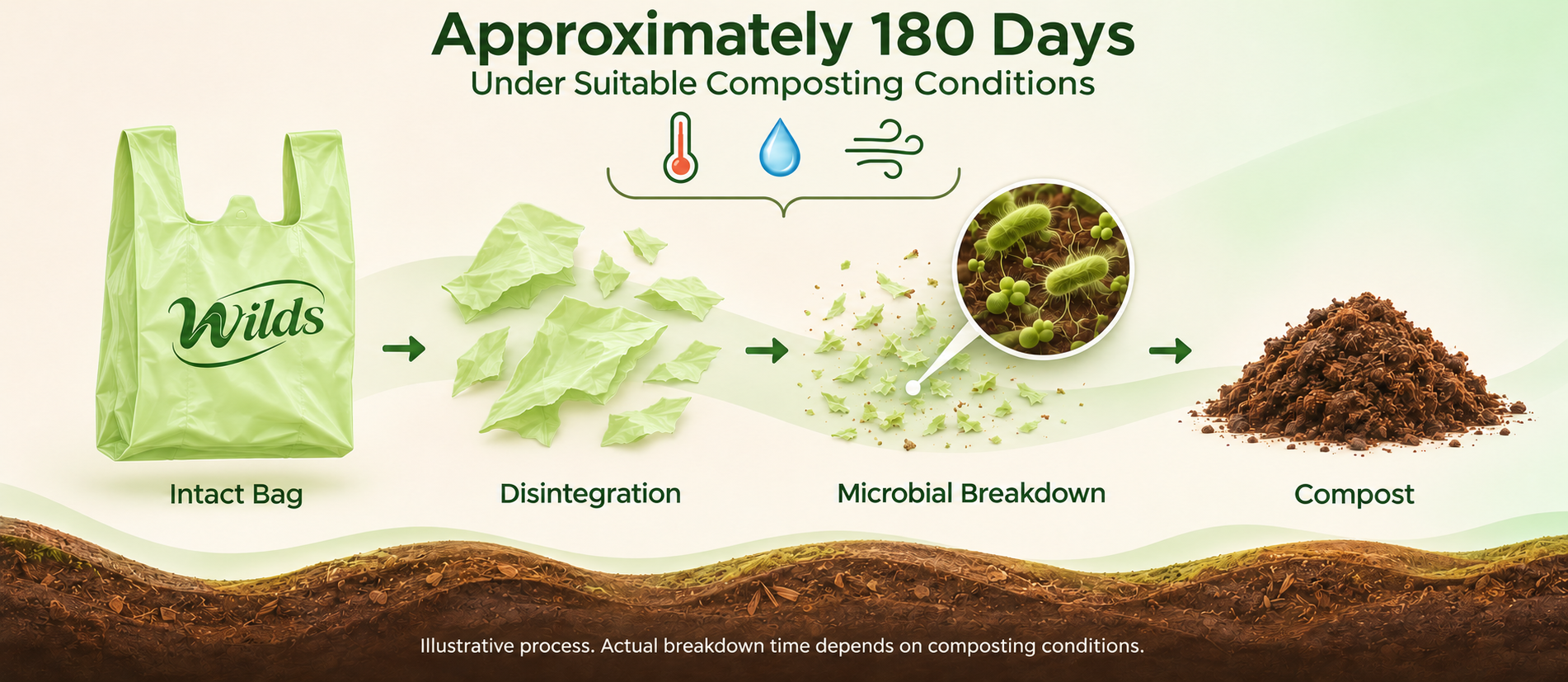
Shopping Bag Composting Illustration
The shopping bag shown is indicated to break down over approximately 180 days under suitable composting conditions. This is a condition-dependent estimate, rather than a guaranteed result in every environment.
Waste Bags and Food Scrap Liners
Waste bags and food scrap liners provide a convenient way to line bins and collect waste. For separate food-scrap collection, confirm that the local collection service and treatment facility accept the selected bag.
Sharing a material family with a shopping bag does not mean that every specification has the same strength or performance. Waste bags should be selected for the bin, contents, load and collection interval.
- Bin dimensions and required bag capacity
- Bag width, length and thickness
- Bottom seal and closure requirements
- Expected load and moisture exposure
- Flat-packed or roll format, with perforations where required
- Printing and packing requirements
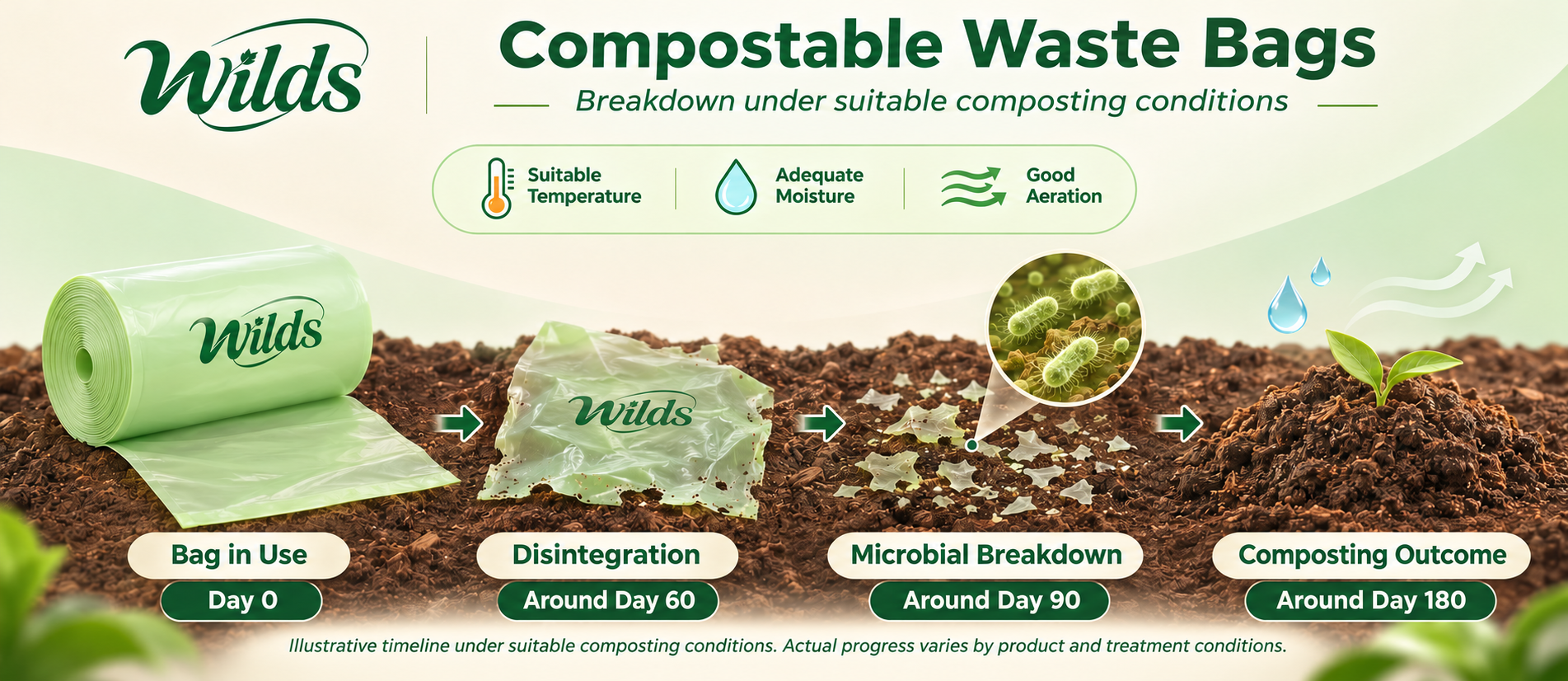
Waste Bag Composting Illustration
The following graphic presents a conceptual timeline with stages labelled around 60, 90 and 180 days. These labels are illustrative reference points, not measured milestones for every waste-bag specification.
What Happens During Composting?
Under appropriate aerobic composting conditions, microorganisms can break down biodegradable components into carbon dioxide, water and biomass. Temperature, moisture, oxygen, microbial activity, film thickness and formulation affect the process.
Disintegration and biodegradation are different stages. Visible fragmentation alone does not demonstrate complete biodegradation or compostability. The compost pictured represents the outcome of processing the bag together with other organic material, rather than a bag turning directly into soil.
Choose the Appropriate Collection Route
- Confirm whether the local collection service accepts the specific bag.
- Check whether the product is intended for commercial or home composting; suitability for one does not establish suitability for the other.
- Do not place bags in conventional plastic recycling unless the local service explicitly accepts them.
- Do not interpret a composting timeline as a breakdown time in seawater, landfill, ordinary soil or when littered.
Where certification is required, request documentation covering the selected finished bag and relevant material, thickness and printing. Certification marks should only be used with the appropriate authorisation.
Discuss Your Bag Requirements
Tell WILDS whether you need shopping bags, waste bags or food scrap liners. Share the required dimensions, load, quantity, printing, destination market and documentation requirements. We can discuss available specifications, samples, MOQ and lead time.
Explore our film and bag range →
View our certifications page →